


Common Orthopedic Pathologies in Children: The Role and Benefits of Physical Rehabilitation
- Martin J Gonzalez
- Oct 29, 2024
- 5 min read
Updated: Jan 8, 2025
Orthopedic pathologies in children can significantly impact their development, comfort, and daily activities. Common conditions like flatfoot deformity, postural disorders, knee alignment issues, and abnormal pelvic tilt affect various aspects of a child’s physical health and well-being.
These conditions can range from mild and self-correcting to more severe cases requiring intervention. Early diagnosis and appropriate management are crucial in minimizing their effects and promoting healthy growth. Physical rehabilitation plays a key role in addressing these issues, offering exercises and techniques that decrease pain, increase strength and flexibility, and improve overall function.
This article provides a broad overview of these common orthopedic pathologies, highlighting their definitions, risk factors, symptoms, and the benefits of physical rehabilitation. By understanding these conditions and their management, parents and caregivers can better support their children’s physical development and quality of life.
1. Flatfoot Issues (Flatfoot Valgus Deformity)
1.1 Definition and Prevalence
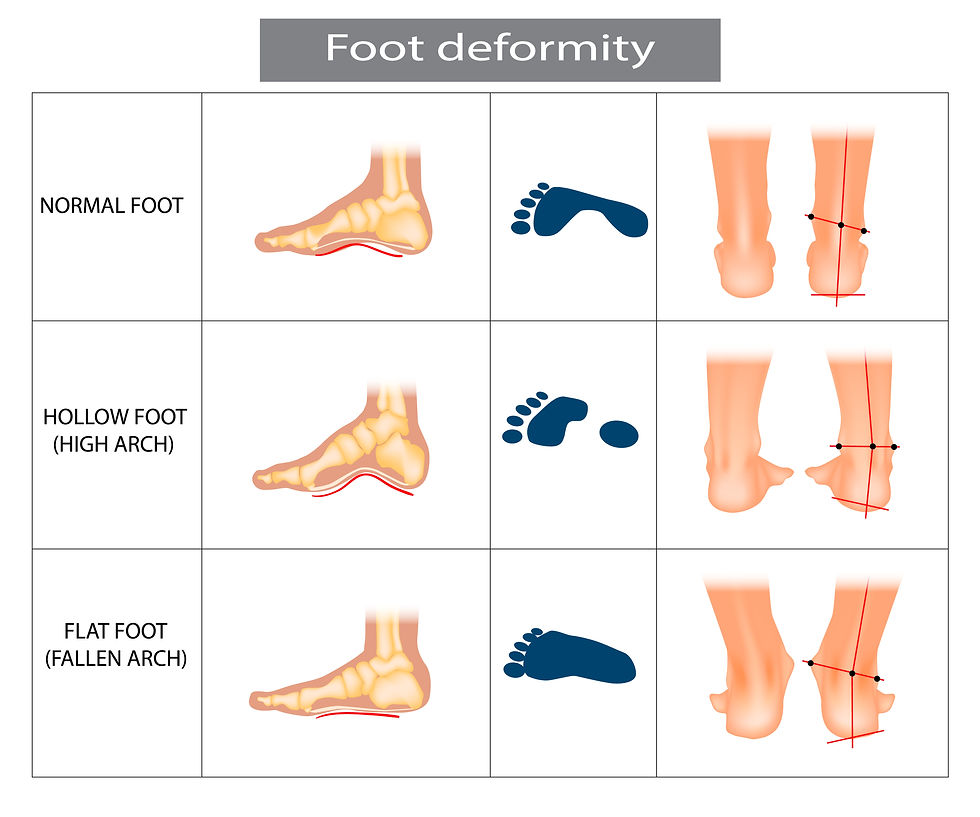
Flatfoot deformity, also known as pes planus, is a condition where the inside arch of the foot is lowered, causing the foot to appear flat. This can lead to discomfort during weight-bearing activities and altered walking patterns. Flexible flatfoot is prevalent in children and often resolves naturally by adolescence. However, rigid flatfoot, where the arch doesn’t form even when not weight-bearing, is less common and may persist into adulthood.
1.2 Risk Factors
Some of the common risk factors for flatfoot deformity include age, gender (boys are more commonly affected), joint relaxation, sedentary lifestyle, and wearing unsupportive footwear.
1.3 Symptoms and Impact on Children
Children with flatfoot may experience pain in the arch, heel, or the inner part of the foot due to abnormal stress and pressure. This can cause increased fatigue, especially during physical activities. The flattening of the arch can lead to less efficient shock absorption, causing discomfort. Flatfoot can also lead to overpronation, where the foot rolls inward during walking, potentially affecting walking patterns and balance.
1.4 Rehabilitation Approach
Physical therapy can help manage flatfoot deformity. Strengthening exercises, particularly for the muscles supporting the arch (e.g., toe curls and heel raises), are beneficial. Stretching tight calf muscles can also help improve foot function. In some cases, orthotics may be recommended to provide additional arch support and correct foot mechanics during activities.
2. Postural Disorders
2.1 Definition and Prevalence
Postural disorders refer to deviations from normal alignment in children that lead to structural or functional impairments. Common postural disorders include hypotonia (low muscle tone), scoliosis, hyperkyphosis (excessive forward curvature of the upper spine), hyperlordosis (excessive curvature of the lower spine), and winged scapula (protruding shoulder blades).

2.2 Risk Factors
These conditions are often linked to lifestyle factors such as a lack of physical activity, improper carrying techniques (e.g., heavy backpacks), or extended periods of sitting, which can cause muscle weakness and imbalances.
2.3 Symptoms and Impact on Children
Children with hypotonia may experience general weakness, delayed motor development, and difficulty with coordination. Adolescents with hyperkyphosis often report back pain and reduced mobility, which can affect their ability to engage in cardio-intensive activities like running. Winged scapula can limit arm mobility and cause discomfort in the shoulders, particularly during overhead movements.
2.4 Rehabilitation Approach
To address these concerns, rehabilitation approaches typically involve strengthening exercises, postural correction strategies, and ergonomic adjustments to the classroom or home setting. The Schroth method, a specialized approach to scoliosis management, is also worth noting for its effectiveness in spinal correction. For more information on the Schroth method, visit this resource.
3. Knee Alignment Issues (Valgus and Varus Deformities)
3.1 Definition and Prevalence
Valgus Deformity (Knock-Knees) is characterized by an inward angling of the knees, this condition causes the knees to cave in while the ankles remain apart. It commonly appears in children aged 2 to 4 and often resolves by age 7.
Varus Deformity (Bowlegs) is when the knees angle outward while the ankles touch. It is typical in younger children but can persist into later childhood if not addressed.

3.2 Risk Factors
Knee alignment issues can be linked to age, foot alignment problems, and nutritional deficits (such as a lack of Vitamin D). Growth disorders may also contribute to the development of these deformities.
3.3 Symptoms and Impact on Children
Children with valgus or varus deformities may experience knee pain, stiffness, and altered gait patterns that present as growing pains. These issues can limit participation in sports and physical activities, potentially affecting their physical fitness and social engagement.
3.4 Rehabilitation Approach
Physical therapy focuses on corrective exercises to strengthen the glutes, hips, and knees. Strengthening the lower extremities helps realign the legs and reduce pain. Additionally, braces or orthotics can be used to correct alignment during physical activities. Surgery is rarely needed unless the deformity is severe or persists beyond adolescence.
4. Pelvic Position Problems (Abnormal Pelvic Tilt)
4.1 Definition and Prevalence
Abnormal pelvic tilt occurs when the pelvis tilts out of its natural alignment, disrupting posture and balance. There are three main types:
Anterior Pelvic Tilt
Posterior Pelvic Tilt
Lateral Pelvic Tilt
4.2 Risk Factors
Muscle imbalances, such as tight hip flexors and weak glutes or hamstrings, are common causes of pelvic tilt. Other contributing factors include leg length discrepancies, scoliosis, and prolonged sitting, which can increase pelvis height and weaken the core and lower body muscles.
4.3 Symptoms and Impact on Children
Abnormal pelvic tilt can cause pain in the lower back, hips, or legs, affecting balance, posture, and overall stability. Children may have difficulty maintaining proper alignment during standing or walking, leading to discomfort with prolonged positions and reduced physical activity.

4.4 Rehabilitation Approaches
Correcting abnormal pelvic tilt requires focusing on strengthening and stretching exercises to balance the muscles around the pelvis. Core stabilization exercises and trunk and hip strengthening can help restore proper alignment. Ergonomic adjustments, such as modifying sitting posture, are also essential for long-term improvement.
Conclusion
Orthopedic pathologies such as flatfoot, postural disorders, knee alignment issues, and abnormal pelvic tilt can significantly impact children’s physical health and daily activities. Early diagnosis and intervention through physical rehabilitation can greatly improve outcomes, helping children develop healthy movement patterns, reduce pain, and prevent long-term complications.
By seeking professional evaluation and following prescribed rehabilitation programs, parents can support their child’s physical development and enhance their quality of life.
Authors: Martin J Gonzalez, DPT, PT
Dr. Gonzalez is a board-certified physical therapist who earned his doctorate degree in 2019. He is a health writer specializing in special needs pediatrics, chronic pain management, musculoskeletal conditions, and injury prevention.
With over five years of experience, he has practiced physical therapy in neurological, outpatient, and pediatric settings. Additionally, he has contributed to numerous health articles, newsletters, and rehabilitation courses.
Dr. Gonzalez excels at simplifying complex medical concepts and health issues, making them easily understandable and engaging for readers. He offers valuable insights for informed decision-making about health, wellness, and patient advocacy.
Anna Fedoseeva, MSc, Pediatric Rehabilitation Specialist
Anna Fedoseeva is a licensed massage therapist, certified personal trainer, and corrective exercise specialist. She has extensive experience in pediatric rehabilitation, including the treatment of orthopedic conditions in children, cerebral palsy, and motor development delays.
Anna holds a master's degree in adaptive physical activity, completed professional training in sports medicine and physical therapy, and attended advanced courses in pediatric rehabilitation. She has worked at the Scientific and Practical Center for Pediatric Psychoneurology under the Moscow Department of Health.
She also specializes in Schroth therapy for scoliosis and Bobath-based rehabilitation for children. Her goal is to integrate modern therapeutic methods into physical rehabilitation programs to improve the health and quality of life of her patients.
Comments